Number plates in the United Kingdom must meet strict legal standards for size, font, spacing, and reflectivity. You can have plates made by registered number plate suppliers, many of which operate through motor factors, garages, and specialist retailers. Some suppliers also offer online ordering, but you still need to provide proof of identity and vehicle entitlement. Choosing a compliant supplier helps you avoid fines and ensures the plate remains readable for road safety and enforcement.
Key takeaways
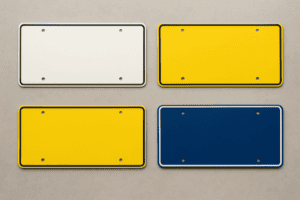
UK law sets clear rules for number plates, and drivers must follow them to keep a vehicle road-legal. The GOV.UK guidance on displaying number plates explains the required layout, character size and spacing, as well as the permitted colours: black characters on a white background at the front and black characters on a yellow background at the rear. Plates must also use the prescribed typeface and remain easy to read, which means no stylised fonts, altered spacing or decorative symbols.
Compliance matters because number plates support vehicle identification for policing, parking enforcement and road safety systems such as Automatic Number Plate Recognition (ANPR). A non-compliant plate can lead to a fine, a failed MOT, or the withdrawal of the registration number. Problems often arise when drivers fit tinted covers, use non-standard screws that change the appearance of characters, or choose plates that do not show the supplier details and the relevant British Standard marking. When ordering replacements, confirm that the supplier follows the legal format and asks for the correct documents before manufacture.

UK law requires most motorists to buy plates from a DVLA-registered supplier. Registration means the business has met the DVLA rules for making and selling number plates, including checks on customer identity and entitlement. Choosing a registered supplier helps reduce the risk of non-compliant plates and can protect against misuse of a registration mark.
Start by checking the official guidance on GOV.UK, which explains who can make plates and what evidence a supplier must see. Many local motor factors, garages, and some dealerships offer this service, provided the business appears on the DVLA register.
When contacting a supplier, ask how the business verifies documents and whether the outlet makes plates on site or orders them from a registered manufacturer. A reputable supplier will explain the process clearly and will not offer to bypass checks. For online ordering, use a service that sets out the required documents and provides clear contact details, such as Get your Number plates Made.
If a supplier refuses to explain the checks, cannot confirm DVLA registration, or offers “show plates” for road use, choose another provider. A short verification step at the start can prevent delays, wasted cost, and problems at an MOT or roadside stop.
When you order number plates from a registered supplier, you must show documents that prove both identity and entitlement to use the registration mark. The supplier must follow the rules set out by the GOV.UK guidance on getting number plates made up, so staff will ask to see original documents rather than photocopies.
For identity, you can usually use a photocard driving licence, a passport, or another accepted form of identification. For entitlement, you must provide evidence that links you to the registration mark. Common examples include the vehicle registration certificate (V5C), the V5C/2 new keeper slip, a certificate of entitlement for a private registration, or a retention document. A valid MOT certificate may support an order in some cases, but it does not normally replace proof of entitlement.
If you order on behalf of a business, the supplier may request company documentation that confirms the organisation’s name and address, alongside evidence of the vehicle’s registration. Ask the supplier in advance which documents it accepts, as requirements can vary within the DVLA rules.
You can get number plates made through three common routes: online retailers, local garages, and high street outlets. Each option can work well, provided the supplier follows the DVLA rules and produces plates that meet the required standard.
Whichever route you choose, confirm the supplier will only produce plates after completing the required checks. That approach reduces the risk of buying plates that fail an MOT or attract enforcement action.
Prices for UK number plates vary by supplier, plate type, and finish. As a guide, a standard pair often costs around £20 to £40, while premium options can raise the price. 3D gel characters and 4D laser-cut acrylic usually cost more because suppliers use extra materials and labour. Some sellers also charge for fitting, delivery, or replacement fixings, so request a clear breakdown before you pay.
Most plates use acrylic with a reflective face, which suits everyday driving and meets the required visibility standard. You may also see metal plates, which can offer a different look and added rigidity. Any material choice must still follow the rules on reflectivity, character style, and markings. If you want to confirm what a compliant plate should look like, check the official guidance on GOV.UK.
Lead times depend on how you order. High street outlets and many garages can produce plates while you wait once checks are complete. Online orders often take longer due to verification and delivery, with custom styles taking extra time. Ordering ahead helps if you need plates for an MOT, a sale, or a planned trip.
In the UK, only registered number plate suppliers can legally make and sell vehicle number plates. The supplier must check your identity and your entitlement to use the registration number, then produce plates that meet British Standard requirements, including the correct font, spacing, and supplier details. Some dealers and garages qualify if registered.
To get a replacement number plate made, you usually need proof of identity (such as a driving licence or passport) and proof of entitlement to the registration number (such as the V5C log book, V750 certificate of entitlement, or V778 retention document). Some suppliers may also ask for proof of address.
Yes. You can order number plates online and still meet DVLA rules if the supplier is a registered number plate supplier and the plates follow the legal format. You must provide proof of identity and entitlement to the registration. Ensure the plate uses the correct font, spacing, colours, and the supplier name and postcode.
UK number plates must use the standard Charles Wright font, with characters 79 mm high (except “1” at 64 mm) and 50 mm wide, plus a 14 mm stroke. Spacing must be 11 mm between characters, 33 mm between the two groups, and margins of at least 11 mm. Standard size is 520 × 111 mm.
Ask the supplier for proof of DVLA registration, such as the Registered Number Plate Supplier (RNPS) certificate or their RNPS number. Then confirm the details by contacting the DVLA and requesting a check against the RNPS register. A legitimate supplier will also ask for your identity and vehicle entitlement documents.