
Personalisation has become a defining feature of UK car culture, shaping how drivers express taste, identity, and practicality through their vehicles. From subtle factory options to bespoke aftermarket upgrades, modifications now sit alongside ownership as a normal part of motoring life. This shift reflects changing attitudes to design, technology, and community, as well as the influence of motorsport, media, and social trends. Understanding how personalisation took hold reveals why it remains so enduring.
Key takeaways
- Post-war prosperity and mass motoring made personalisation a visible social statement.
- British youth cultures shaped styling trends, from mods to hot hatch enthusiasts.
- Aftermarket parts and specialist garages helped customisation spread beyond motorsport.
- Insurance, MOT rules, and type approval influenced which modifications became mainstream.
- Car shows, cruises, and magazines turned personalised builds into shared community identity.
- Online forums and social media accelerated trends and normalised bespoke detailing.
Post-war Britain and the rise of the personalised car
After 1945, Britain rebuilt its economy and its roads. As wages rose and credit became easier to access, more households could buy a car rather than rely on public transport. That shift changed what a car meant. Owners started to treat vehicles as personal property and a public statement, not only a practical tool.
Manufacturers offered limited factory choice, so drivers turned to local garages and accessory shops. Common changes included two-tone paint, chrome trims, auxiliary lamps and upgraded radios. Some motorists fitted period-correct parts from makers such as Lucas to improve lighting and add visual flair. Others sought better handling and comfort through tyres, suspension tweaks and interior retrims.
Motorsport and youth culture also shaped taste. British racing success and the growth of clubs encouraged owners to copy competition details, from bonnet straps to number roundels. At the same time, the expanding motorway network made long-distance driving normal, so practicality drove many upgrades. The National Archives records show how post-war policy and production targets influenced car ownership, yet personalisation grew from everyday choices made on driveways and in workshops across the country.
Motorsport, tuning shops, and the influence of custom engineering
Motorsport gave UK drivers a clear template for personalisation: improve performance, then make the result visible. Club racing, rallying, and track days popularised upgrades such as freer-flowing exhausts, revised suspension, and brake improvements. Specialist tuning shops translated those lessons into road cars, offering practical packages that balanced speed, reliability, and legality. Engineers and fabricators also brought custom methods into everyday builds, from bespoke intake systems to carefully mapped engine control units (ECUs), which manage fuel and ignition timing.
Media and events helped spread the culture. Coverage from BBC Sport Motorsport and guidance from bodies such as Motorsport UK reinforced the link between competition and credible engineering. As a result, personalisation moved beyond styling alone and became a respected craft, where measurable gains and safe workmanship mattered as much as visual impact.
Youth identity and style: from Mod culture to the hot hatch era
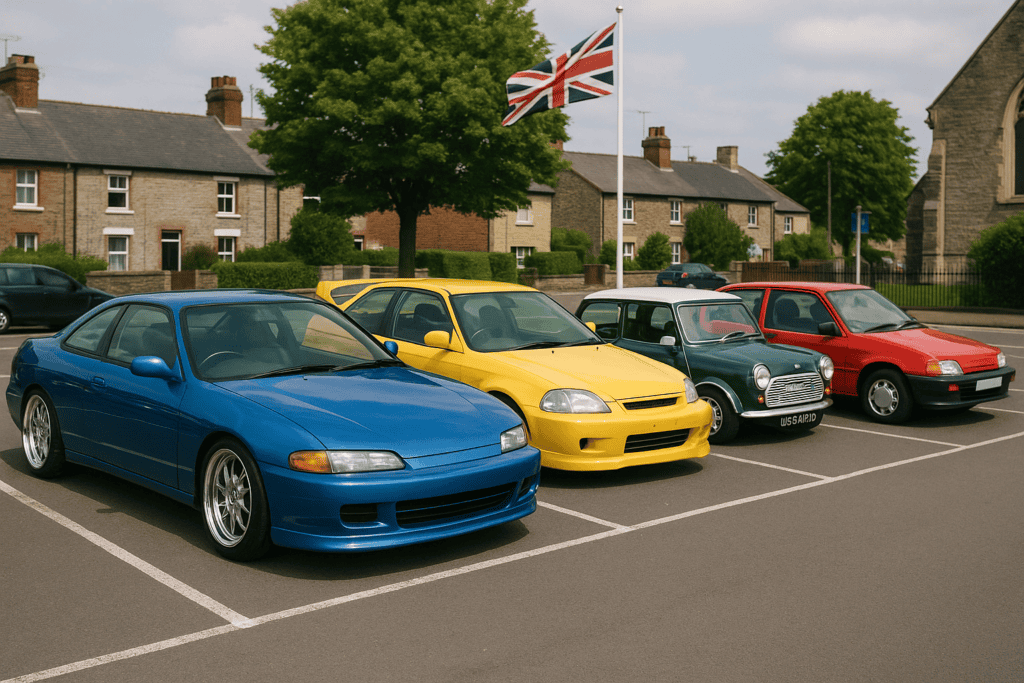
Youth movements turned the car into a wearable form of identity. During the early 1960s, Mod culture valued sharp presentation and modern design. Scooters often led that scene, yet compact saloons and coupes also gained subtle styling changes that matched tailored clothing and clean lines. Owners favoured neat paintwork, period-correct wheels, and restrained trim rather than aggressive bodywork. That approach signalled taste, belonging, and attention to detail.
As the 1970s moved into the 1980s, younger drivers embraced a louder visual language. The hot hatch made performance accessible, while also offering a clear canvas for personal style. Models such as the Volkswagen Golf GTI and the Ford Fiesta helped normalise sporty cues on everyday roads. Drivers then amplified those cues with affordable upgrades that suited urban life and weekend meets.
- Alloy wheels and lower-profile tyres to sharpen stance
- Body stripes, badges, and colour-coded mirrors for instant recognition
- Upgraded stereos and speakers as social status symbols
- Seat trims, steering wheels, and gear knobs to personalise the cabin
These choices mattered because peers could read them at a glance. Personalisation became a shared language, linking music, fashion, and local reputation to a specific car.
Regulation and road safety: how UK law shaped legal modifications
UK law has steered personalisation towards changes that keep cars safe and roadworthy. The annual MOT test set a clear baseline for condition and emissions, which shaped choices on lighting, tyres, brakes, suspension, and exhaust systems. Owners could still modify, yet each change needed to work with the vehicle rather than against it.
Rules on construction and use also influenced style. Tinted windows, number plates, and exterior lighting attracted attention because poor visibility and confusing signals raise risk. Noise limits and emissions requirements pushed many enthusiasts towards better-engineered parts instead of crude “straight-through” solutions. Insurers reinforced that discipline, since undeclared modifications can invalidate cover.
Guidance from the Driver and Vehicle Standards Agency (DVSA) and the UK Government helped normalise a practical approach: personalise the car, but keep it compliant, testable, and predictable on public roads.
Modern personalisation: manufacturer options, online communities, and future trends
Modern UK personalisation often starts at the factory. Configurators let buyers choose paint, wheels, trim, driver-assistance features, and software services before delivery. Brands such as MINI and Land Rover market these options as part of ownership, while finance packages make higher specifications easier to reach. After purchase, online communities shape taste and standards. Forums, social platforms, and video channels share fitting guides, parts reviews, and dyno results, which helps owners avoid unsafe or poor-quality changes.
Future trends will centre on electrification and connectivity. Electric vehicles reduce the scope for traditional engine tuning, yet they expand opportunities in software settings, energy management, and lightweight wheel and tyre choices. At the same time, advanced driver-assistance systems make calibration and compatibility essential after any change. Guidance from the DVSA will remain a key reference as technology and regulation develop.