
Converting a panel van into a campervan requires compliance with DVLA registration rules, number plate requirements and general road-legal standards before it can be used lawfully on UK roads. The process covers both vehicle classification and construction details, including seats, lighting, weight, insurance and MOT status. This guide explains the main checks, the evidence the DVLA may require, and the practical steps needed to keep the converted vehicle legal, correctly registered and ready for use.
Key takeaways
- Check the V5C before ordering plates; conversions usually keep the same registration number.
- Update the V5C promptly with body type, colour, weight figures, taxation class and VIN details.
- DVLA body type changes need permanent living features, external camper cues and clear completed-vehicle photos.
- Keep the rear plate fully visible; fit an auxiliary plate and light board if accessories block it.
- Before European travel, display the correct UK identifier and recheck plate visibility with racks fitted.
- Tell your insurer about windows, fixed furniture, gas, electrics and any weight or use changes.
- Before departure, confirm V5C, insurance, MOT, travelling weight, lighting and load security.
Does a panel van conversion change the registration number?
Check the registration number on the V5C before ordering new plates, because a campervan conversion does not normally create a new registration mark. In most cases, the vehicle keeps the same number when you change it from a panel van to a motor caravan. The main DVLA update concerns the body type and vehicle details recorded on the log book, not the age identifier or registration itself.
You still need to tell the DVLA about the conversion and send the evidence it asks for, which may include photos and a revised V5C application. Once the record is updated, the number plates must still meet UK display standards for size, spacing, material and visibility. That becomes especially relevant if rear conversions include spare wheels, racks or trim that block any part of the plate. Check the full road-legal number plate rules before fitting replacement plates or rear accessories.
Which V5C details must be updated after a campervan conversion?
Update the V5C as soon as the conversion is complete to reduce problems with insurance, MOT records and resale checks. Send the amended log book to DVLA and make sure the description matches the vehicle as it now appears on the road.
Review the body type, colour if it changed, and any weight figures affected by the build. Check the taxation class and VIN details as well. If the finished layout meets DVLA expectations for a motor caravan, request that change and include clear photos and supporting documents.
The V5C is the main record insurers, buyers and enforcement systems use, so mismatches can cause avoidable queries after a major conversion. For larger builds, VW Crafter Conversion Specialists can help keep the finished specification consistent with the paperwork.
Not every converted van is reclassified as a motor caravan. If DVLA keeps the original body description, the vehicle can still be road legal, but the V5C must stay accurate in every other respect.
Meeting DVLA motor caravan criteria and evidence requirements
DVLA can refuse a body type change if the finished van still looks like a goods vehicle. Internal fittings alone are not enough. A motor caravan application needs permanent living features and external cues that match DVLA guidance.
The evidence pack must show the completed vehicle, not a van mid-build. Include clear colour photos of each side, the front, rear, and the interior bed, seating, storage, cooking area, and table where fitted. Permanent fixtures carry more weight than removable kit. If the exterior has side windows, a high-top, graphics, or an awning rail, show them clearly because DVLA also considers road-facing appearance.
If DVLA accepts the evidence, the record can be updated to motor caravan. If not, the vehicle may stay recorded as a van with windows, even though the conversion remains lawful for road use.
Number plate rules for campervans, bike racks and rear accessories
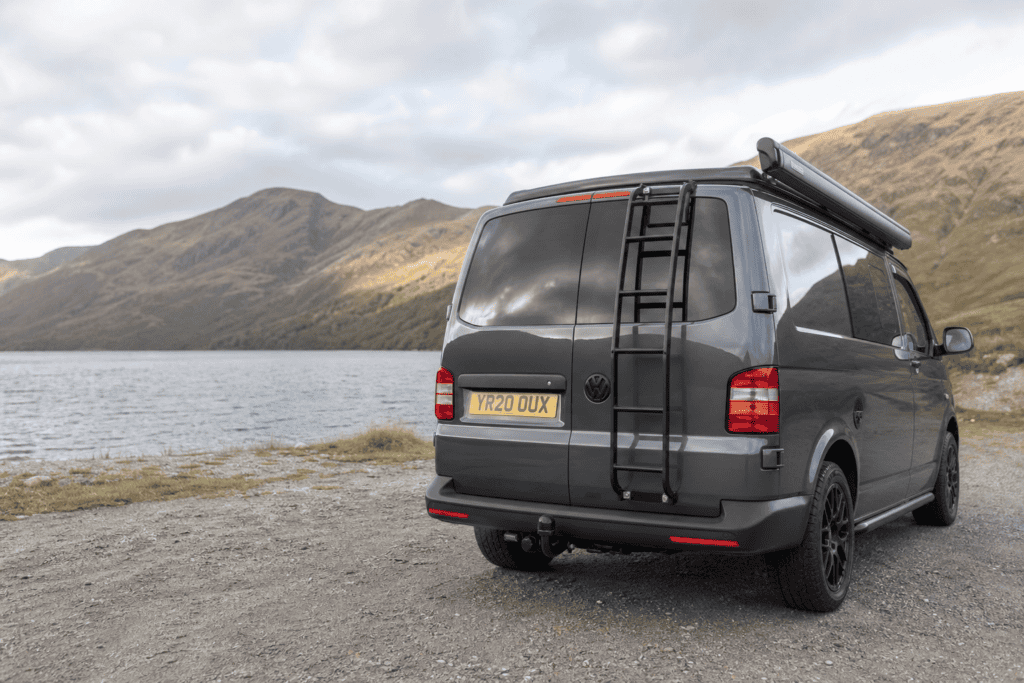
The rear number plate must stay clearly visible and readable at all times, even when a bike rack, storage box or spare wheel carrier is fitted.
Check the plate from straight behind before driving. If any part is covered, fit an auxiliary rear plate to the rack and, if the rear lights or reflectors are blocked, add a compliant light board. Use plates from a registered number plate supplier, keep the standard font and spacing, and make sure the rear plate is lit at night under GOV.UK number plate rules.
Common failures include tinted plates, altered letters, decorative fixings that change character shapes, and racks that hide the plate when loaded. Check visibility again after fitting bikes, because legality depends on the vehicle as used, not just the empty rack.
Taking a converted campervan abroad: UK identifiers and plate display
Cross-border travel can fail at the roadside if the campervan shows the wrong national identifier, even when the conversion is legal in the UK. Check before leaving: a UK-registered vehicle must display a UK identifier in most European countries. GOV.UK explains when a plate with the Union flag and UK identifier is enough and when a separate UK sticker is needed.
Plate visibility rules still apply abroad. Bike racks, boxes and spare wheel carriers must not hide the rear registration mark, and any trailer or caravan needs its own matching rear plate. If the campervan tows abroad, order the correct trailer plate from Number Plates For Caravans before travel rather than relying on a worn spare.
Why a specialist campervan conversion company helps with compliance
Use a specialist Camper Conversion Company if compliance is a priority, especially where seating, electrics, gas or weight changes form part of the build. A professional converter can plan the job around road-legal requirements from the start, rather than trying to correct problems after the van is finished.
That approach reduces avoidable issues with evidence, workmanship and inspection. Good converters keep clear build records, fit components to recognised standards, and flag points that affect the V5C, MOT or insurance. Seat belt mountings, gas safety, ventilation, payload and fixed furniture all need careful execution. If the van requires plating, weight checks or specialist approvals, those points should be identified before trim and furniture hide the work.
Self-build conversions still have a place when the owner understands GOV.UK guidance and uses qualified trades where needed. That route suits simple layouts with fewer structural changes. Once the build includes rewiring, gas appliances, extra travel seats or body modifications, specialist input is usually the safer route and leaves a clearer paper trail for future sale.
Insurance, MOT and weight checks after the conversion
Tell your insurer about the completed conversion before the van goes back on the road. The policy must match the finished vehicle, including fixed furniture, added windows, gas equipment, electrical systems and any change in use. If the insurer still rates it as a standard panel van, cover can fail where the build materially changes risk or value.
Book an MOT that matches the vehicle’s current test class and construction. Interior fittings do not automatically change the MOT process, but testers may inspect seat belt mountings, lights, tyres, emissions and any sharp or insecure fixtures that affect roadworthiness. GOV.UK MOT guidance and the MOT inspection manual set the baseline.
Weigh the finished campervan on a public weighbridge once the build is complete. Compare the result with the maximum authorised mass and axle limits shown on the VIN plate. Extra cabinets, water tanks, leisure batteries and bike racks can push a conversion beyond its legal payload, which affects safety, braking and insurance acceptance. GOV.UK guidance on vehicle weights explains the limits.
Final road-legal checklist before travelling
Five checks before departure prevent common roadside delays: documents, weight, plate visibility, lighting and load security. Confirm the V5C was returned with the correct details, the insurance policy reflects the finished conversion, and the MOT status is current on GOV.UK.
Next, verify the van in travelling trim. Load water, gas bottles, bikes and luggage, then compare the total against the maximum authorised mass on the VIN plate. Check tyre pressures against the manufacturer’s loaded settings, secure internal furniture and loose gear, and test every external light. If the rear rack carries bikes or a box, confirm the number plate and any required light board stay fully readable.
Problems often start with late changes after compliance checks. Added awnings, towbar accessories and extra storage can push weight over the limit or block the rear plate. If layout or equipment still needs work, review completed builds such as Mercedes Sprinter Sports Conversions and Ford Custom Camper Vans to see how a finished touring setup is packaged cleanly.
Frequently Asked Questions
Does converting a panel van into a campervan mean you need to change the registration number?
No. Converting a panel van into a campervan does not usually require a new registration number. The registration stays with the vehicle unless the DVLA issues a change after major identity-related alterations. You may still need to update the body type, tax class or vehicle details on the V5C.
Which V5C details must be updated after a campervan conversion?
Changing the van’s use does not update the logbook automatically. After a campervan conversion, you must tell DVLA about any changes to the vehicle’s body type, taxation class if relevant, colour, weight details if altered, and your name or address if those have changed.
Check the V5C carefully before sending it, because mismatched details can delay the update.
What does the DVLA require to register a converted van as a motor caravan?
Wait until the conversion is complete, then send the V5C to DVLA with clear photos and evidence of the permanent living features. DVLA checks fixed sleeping, seating, cooking and storage facilities, plus the van’s external appearance; if it does not meet its motor caravan criteria, the body type may not be changed.
Can a bike rack or rear storage box make a campervan number plate illegal by obscuring it?
If a bike rack or rear box hides any part of the number plate, the van is not road legal. The plate must stay fully visible, readable and properly lit at night.
If the rack blocks it, fit a separate rear number plate board with matching lights before driving.
What documents and plate checks should you complete before taking a converted campervan abroad?
Three checks prevent most avoidable border and roadside problems. Carry the V5C log book, valid insurance, MOT and driving licence, and confirm your insurer covers the countries you will enter. Then check your number plates are legal, readable and display the required UK identifier or separate UK sticker for the countries on your route.