
A personalised number plate’s resale price depends on its registration format, character appeal, rarity, age, legal transfer status, buyer demand and market comparables. Short, memorable combinations and registrations with broad appeal usually command higher prices than plates with limited recognition or awkward character patterns. This article explains the seven main factors that shape value, how to assess realistic asking prices, and which details can raise or limit resale potential.
Key takeaways
- Check the plate against current DVLA release styles before setting an asking price.
- Shorter, cleaner combinations usually attract stronger demand than longer plates with filler characters.
- Price clear names, initials and familiar words by buyer recognition, not rarity alone.
- Plates understood at a glance often sell faster and hold firmer asking prices.
- Dateless registrations often command higher prices because they hide a vehicle’s age.
- Use recent sold listings from dealers and auctions, not hopeful advertised prices.
- Compare several similar plates, then adjust for transfer readiness and market breadth.
How Plate Format and Character Length Shape Market Value
Check the plate against current release styles on the DVLA Private plate search before setting a price. Format sets the ceiling for demand, because buyers tend to favour registrations that look clean, legal and easy to remember. Shorter combinations usually attract stronger interest than long plates with filler characters.
Character length affects value in two ways. First, fewer characters give a plate more visual impact. Second, short formats leave less room for awkward spacing, unclear letter-number swaps or forced initials. Dateless plates often command the highest prices because they can suit almost any vehicle age, while current-prefix and current-suffix formats appeal to narrower buyer groups.
| Plate format feature | Typical resale effect |
|---|---|
| Dateless plates | Often command the highest prices because they can suit almost any vehicle age. |
| Current-prefix and current-suffix formats | Usually appeal to narrower buyer groups than dateless plates. |
| Shorter combinations | Tend to attract stronger interest because they look cleaner and are easier to remember. |
| Longer combinations with filler characters | Can look cluttered and usually draw weaker demand. |
| Clear, readable character mix | Easier to market than plates needing awkward spacing or unclear letter-number swaps. |
Readability also shapes resale value. Plates that form a clear name, word or recognisable set of initials are easier to market than combinations that need explanation. If the format looks cluttered, age-specific or hard to interpret at a glance, expect a smaller pool of buyers and a longer selling period.
Why Names, Initials and Recognisable Words Command Higher Resale Prices
Plates that read as a clear name, set of initials or common word often sell faster and hold firmer asking prices than random letter-and-number mixes. Price them against buyer recognition first, not just rarity. A registration that can be understood in a glance usually has a wider resale market.
Names and familiar words win because demand is easier to predict. Buyers can picture the plate on a vehicle straight away, and that instant clarity supports stronger offers. Clean readings such as “JAMES”, “SARAH” or a simple surname fragment tend to attract broader interest than obscure abbreviations that need explaining. Initials also perform well when they match common combinations, especially two or three letters that suit both private buyers and gift purchases.
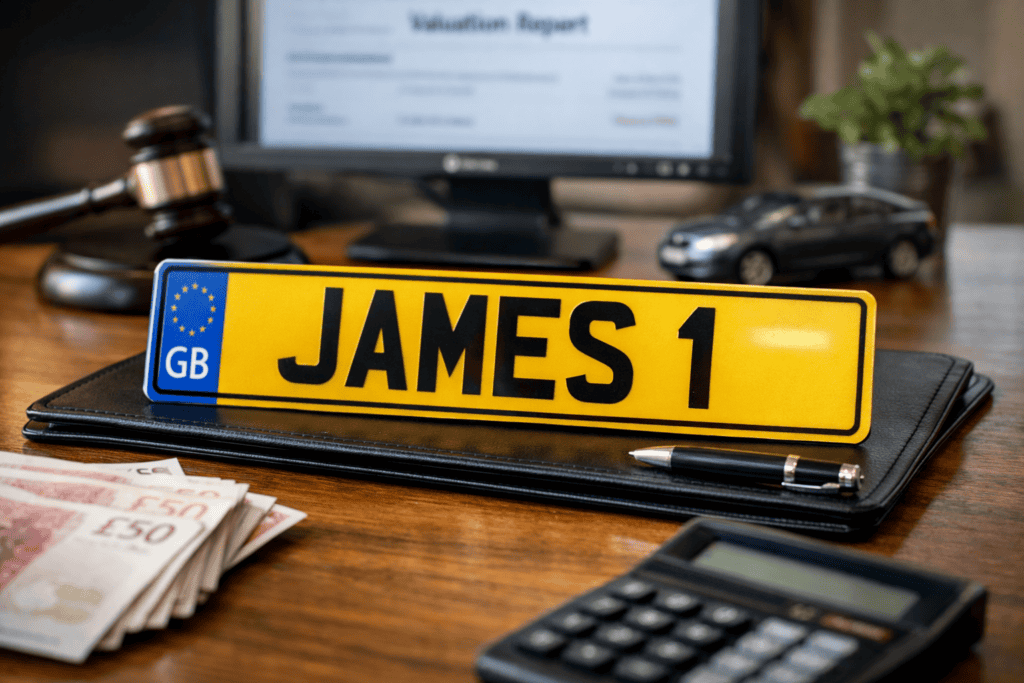
Alternative word styles still have value, but the pool narrows as interpretation gets harder. Phonetic spellings, slang terms and compressed words can work when they stay obvious and legal under DVLA display rules. Plates that only make sense with spacing tricks or wishful reading usually face weaker demand, since buyers cannot rely on illegal presentation. When setting a resale figure, compare the plate with active listings and completed dealer stock at DVLA Registrations, then adjust for how quickly the wording is recognised. If the reading is strong but the market is niche, a managed broker such as buyprivateplates.uk can help test demand before the price drifts too high.
How Age, Registration Rules and DVLA Transfer Status Affect Price
- Dateless plates that do not reveal a vehicle's age.
- Registrations with broad appeal that do not clash with a buyer's style.
- Clear paperwork and confirmed DVLA eligibility.
- A plate already on a DVLA retention document, making assignment or sale easier.
- Age identifiers that make a newer car look older.
- Formats tied to a specific year or narrower buyer group.
- Letter sequences with weaker buyer appeal.
- Uncertainty over transfer status, release or assignment.
Age can limit value before demand enters the picture. A registration must stay within DVLA rules, which affects what buyers can display. Dateless plates often attract stronger prices because they hide a car’s age, while suffix, prefix and current-style marks usually suit fewer buyers.
Registration rules shape resale in practical ways. Plates that look older, cleaner or less tied to a specific year often appeal more widely. Age identifiers can reduce demand if they make a newer car look older or clash with a buyer’s style. Letter appeal also matters, especially where initials or sequences overlap with Popular Number Plate letters.
Transfer status affects price just as directly. A plate already on a DVLA retention document is easier to assign or sell than one still attached to a vehicle. Buyers often pay more for registrations with clean paperwork, confirmed eligibility and no uncertainty over release or assignment.
How to Estimate a Realistic Asking Price Before You Sell
The best asking price comes from recent sold evidence, not the amount a seller hopes to achieve.
Start by checking comparable registrations that have actually sold through Plate Dealers, auction platforms and dealer stock lists. Use several matches, then narrow the range by buyer appeal, transfer readiness and how broad the market is for that exact combination. If dealer prices look high, remember they often include margin, advertising costs and time held in stock.
Set an asking price slightly above the lowest figure you would accept, but keep it close enough to attract enquiries. A realistic price usually sits between a trade offer and a full retail listing. Before publishing, confirm the transfer status with the DVLA, check whether retention or assignment fees apply, and keep those costs separate from your valuation.
Sellers often overprice based on rarity alone, copy unsold listings, or ignore admin costs that reduce net return. Clear presentation also affects response rates. Once you have your new plates, don’t forget to buy the Physical plates from Us.
Frequently Asked Questions
How does the age or release history of a personalised number plate affect its resale value?
Older plates and those from early release series often sell for more. Age can signal rarity, especially if the combination is no longer issued or comes from a limited format. Plates with a clear, traceable release history also tend to inspire more buyer confidence at resale.
Why do short registrations and common name combinations usually sell for higher prices?
Scarcity drives the premium. Short registrations are harder to find, easier to remember, and often look cleaner on a vehicle.
Common name combinations attract more buyers because they match widely used names or initials. Wider demand usually leads to stronger competition and higher resale prices.
How do spelling, readability and character arrangement influence what buyers will pay for a private plate?
Choose a plate that reads clearly at a glance and matches a familiar word, name or set of initials. Buyers pay more for combinations that need little explanation.
Strong spelling, easy readability and a natural character order make a plate more memorable. Forced letter swaps, awkward spacing and confusing sequences usually reduce demand.
Does DVLA transfer eligibility or retention status affect the value of a personalised number plate?
If a plate cannot be transferred or is not on retention, its resale value usually drops. Buyers pay more for registrations with clear transfer eligibility and valid retention status, because the sale is simpler and the plate can move to another vehicle without delay. Check DVLA status before pricing it.
How can you estimate the market value of a personalised number plate before selling it?
Three checks usually give the clearest price range. Compare recent asking prices for similar plates, note the plate’s age, format and letter-number appeal, then adjust for rarity and buyer demand. If several close matches cluster around one figure, that range is often the best guide before listing.